
on this page
-
Markets
-
Services

Swapna Parab
Senior Architect III, Rail & Transit, Alexandria, Virginia, USA contact form+1 571 551 5562
In the heart of Maryland’s suburbs on the outskirts of Washington D.C., the Purple Line represents more than a rail corridor. Here, where transit lines radiate outward from the center, commuters often face heavy traffic with limited public transit options. Once operational, this 16.2-mile, light-rail connector will link neighborhoods across Montgomery and Prince George’s counties to employment centers, schools, colleges, medical centers, libraries and transit centers. It also will connect to Metro stations, Amtrak, buses, trails, and walking and biking paths.
For many communities along the route, the Purple Line represents access. Access to opportunities, education, jobs, public spaces, and, most importantly, to each other. This is more than just a transportation project, a catalyst for future development, and an engine for urban transformation. Through years of multidisciplinary collaboration among transit agencies, designers, builders, artists and communities, the Purple Line has evolved as a corridor where placemaking and public identity will come together.
As the project enters its testing and commissioning phase, it stands as a testament to how infrastructure can be purposeful. Through thoughtful design and collaboration, we have helped shape a transit system that doesn’t just move people but transforms lives.
A Holistic Vision for Transit-Oriented Development (TOD)
Transit-oriented development is shaped long before designing and building a project. It is done through planning, policy, land-use decisions, agency coordination and community vision. Yet, station design plays a critical role in making that vision tangible. The Purple Line demonstrates how transit investment can shape future growth when station design is coordinated with the surrounding public realm. Throughout the system, stations are positioned to support walkable access, bike path connections, bus transfers, public spaces and future development. The emphasis is not only on moving riders efficiently but creating station areas that become part of daily community life—safe, intuitive, accessible, and connected to neighborhoods they serve.
In Bethesda, the Purple Line is integrated within Montgomery County’s densest urban environment. Its integration with the Washington Metropolitan Area Transportation Authority (WMATA) Red Line, Capital Crescent Trail, adjacent public spaces, and a significant mixed-use development reinforces the station’s role as a gateway to the neighborhood and a regional activity center.
Across the University of Maryland, College Park (UMD) campus, the Purple Line serves a very different but equally significant purpose. Four stations connect the university's research park and student housing to regional Maryland Area Rail Commuter (MARC) and Amtrak commuter lines, and the WMATA Metro station. With multiple stations on campus, the project supports a well-connected, vibrant college town where students, faculty, staff, and visitors can move efficiently between the university, nearby neighborhoods, and regional destinations without relying solely on cars.
At the New Carrolton Station, the Purple Line strengthens one of the region’s major multimodal hubs. By connecting Metro, MARC, Amtrak, bus service, and pedestrian routes and surrounding development, the station becomes a strong regional gateway. Its value is not just in transportation connections but its ability to support long-term growth around a transit accessible center.
Overall, the Purple Line passes through many different communities—dense urban centers, a university campus, suburban neighborhoods, commercial corridors, and small transit stations. It adapts to the needs of these communities by incorporating below-grade segments and tunnels in dense neighborhoods, elevated structures at complex intersections, and street-level infrastructure in small-scale neighborhoods. This diverse design creates a unique feature at each station that allows the line to connect with the community.
Successful transit-oriented development is not to be measured simply through shear amount of investment in the areas near stations. It is measured by how well people can walk, bike, transfer, gather, navigate and access their daily commute. People of all ages and abilities should feel safe when commuting, and stations must offer an accessible, welcoming experience. Over time, stations will become the identity of surrounding communities.
Stations that Reflect Community
From the beginning, the Purple Line was envisioned as more than just a railway. It was planned as a multimodal transit system that could support placemaking, improve walkability, strengthen neighborhood identity, and create vibrant, inviting public places along its corridor. Through station improvements, public art plazas, trails, streetscape enhancements, and better pedestrian and bicycle connections, the project creates opportunities for transit to become part of everyone’s daily life.
The value of its stations is ultimately measured in everyday moments—a college student getting to class without needing his car; a commuter reaching his workplace through an easy rail-and-bus transfer, a family with young children visiting places of interest in the region; and locals recognizing the history and culture of their communities through public art. These elements make the transit experience personal.
Placemaking Through Public Art
Placemaking is a defining feature of the Purple Line. Each station offers an opportunity to reflect the culture, character and vibrancy of surrounding communities. Public art is integrated into the station experience, contributing to how riders recognize each station and connect with the place.
Our team played a central role in supporting the integration of unique, public art across the corridor, collaborating closely with artists, agencies, UMD, and local stakeholders. This work included guiding artists through the design and implementation stages, coordinating approvals, and helping translate artistic concepts into durable, maintainable elements. At many stations, art is embedded directly into the infrastructure itself. Artist-designed graphics are printed directly on glass windscreens and canopies, creating dynamic, light-responsive installations that are both visually compelling and built for long-term durability.
In other locations, sculptures and distinctive design elements mark station entrances, serving as landmarks and intuitive, wayfinding elements that create memorable points of arrival. These works help transform each station into a more welcoming public space. They celebrate local culture, reveal neighborhood stories, and give communities a visible presence within the transit system.
By weaving art into architecture, the Purple Line fosters a strong sense of belonging and reminds riders that transit can be an artful journey, and an experience in itself.
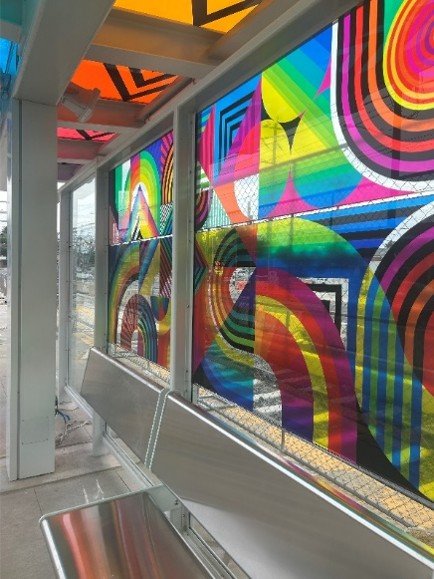
Image 1: Piney Branch Station. Colorful artist-designed graphics integrated in station windscreen.
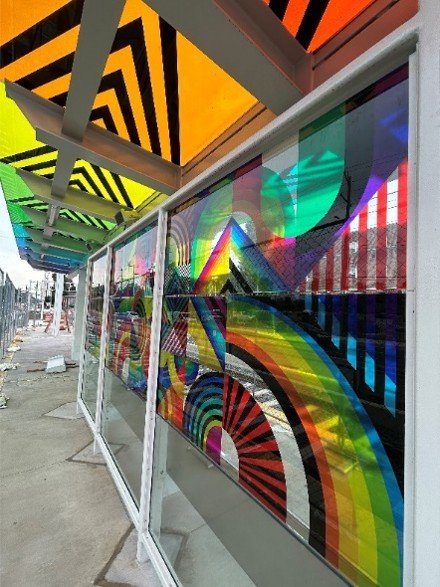
Image 2: Piney Branch Station. Colorful artist-designed graphics integrated in station windscreen.
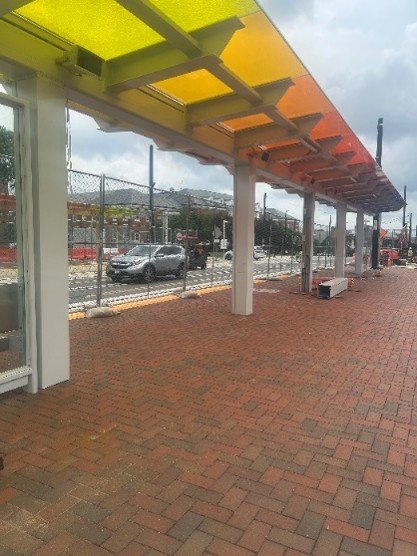
Image 3: Campus Center Station, University of Maryland. Art design integrated with campus plaza. (Art by Leggae Lewis)
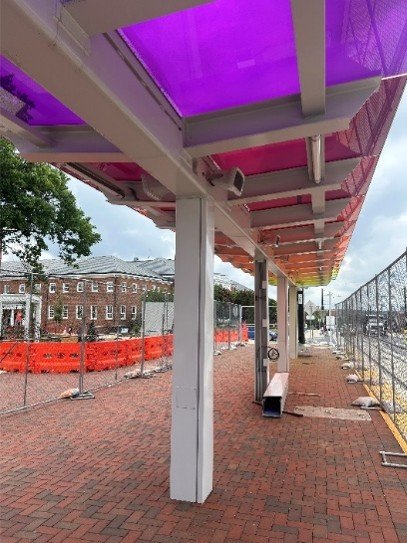
Image 4: Campus Center Station, University of Maryland. Art design integrated with campus plaza. (Art by Leggae Lewis)
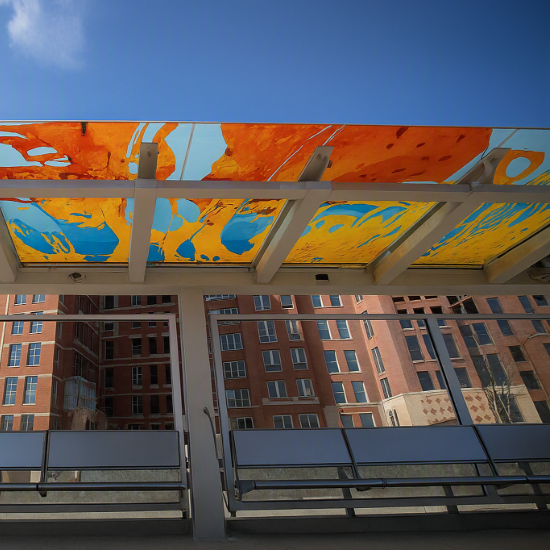
Image 5: Chevy Chase Station. Abstract art integrated in station canopy. (Art by Heidi Lippman)
Please note that you are now leaving the AtkinsRéalis website (legal name: AtkinsRéalis Group inc.) and entering a website maintained by a third party (the "External Website") and that you do so at your own risk.
AtkinsRéalis has no control over the External Website, any data or other content contained therein or any additional linked websites. The link to the External Website is provided for convenience purposes only. By clicking "Accept" you acknowledge and agree that AtkinsRéalis is not responsible, and does not accept or assume any responsibility or liability whatsoever for the data protection policy, the content, the data or the technical operation of the External Website and/or any linked websites and that AtkinsRéalis is not liable for the terms and conditions (or terms of use) of the External Website. Further, you acknowledge and agree that you assume all risks resulting from entering and/or using the External Website and/or any linked websites.
BY ENTERING THE EXTERNAL WEBSITE, YOU ALSO ACKNOWLEDGE AND AGREE THAT YOU COMPLETELY AND IRREVOCABLY WAIVE ANY AND ALL RIGHTS AND CLAIMS AGAINST ATKINSRÉALIS, AND RELEASE, DISCHARGE, INDEMNIFY AND HOLD HARMLESS ATKINSRÉALIS, ITS OFFICERS, EMPLOYEES, DIRECTORS AND AGENTS FROM ANY AND ALL LIABILITY INCLUDING BUT NOT LIMITED TO LIABILITY FOR LOSS, DAMAGES, EXPENSES AND COSTS ARISING OUT OF OR IN CONNECTION WITH ENTERING AND/OR USING THE EXTERNAL WEBSITE AND/OR ANY LINKED WEBSITES AND ANY DATA AND/OR CONTENT CONTAINED THEREIN.
Such waiver and release specifically includes, without limitation, any and all rights and claims pertaining to reliance on the data or content of the External Website, or claims pertaining to the processing of personal data, including but not limited to any rights under any applicable data protection statute. You also recognize by clicking “Accept” that the terms of this disclaimer are reasonable.
The information provided by Virtua Research cited herein is provided “as is” and “as available” without warranty of any kind. Use of any Virtua Research data is at a user’s own risk and Virtua Research disclaims any liability for use of the Virtua Research data. Although the information is obtained or compiled from reliable sources Virtua Research neither can nor does guarantee or make any representation or warranty, either express or implied, as to the accuracy, validity, sequence, timeliness, completeness or continued availability of any information or data, including third-party content, made available herein. In no event shall Virtua Research be liable for any decision made or action or inaction taken in reliance on any information or data, including third-party content. Virtua Research further explicitly disclaims, to the fullest extent permitted by applicable law, any warranty of any kind, whether express or implied, including warranties of merchantability, fitness for a particular purpose and non-infringement.
The consensus estimate provided by Virtua Research is based on estimates, forecasts and predictions made by third party financial analysts, as described above. It is not prepared based on information provided by AtkinsRéalis and can only be seen as a consensus view on AtkinsRéalis' possible future results from an outside perspective. AtkinsRéalis has not provided input on these forecasts, except by referring to past publicly disclosed information. AtkinsRéalis does not accept any responsibility for the quality or accuracy of any individual or average of forecasts or estimates. This web page contains forward-looking statements based on current assumptions and forecasts made by third parties. Various known and unknown risks, uncertainties and other factors could lead to material differences between AtkinsRéalis' actual future results, financial situation, development or performance, and the estimates given here.
Downloads
Trade releases