
-
Markets
-
Services
David Clark
Defence Global Market Lead, Bristol, United Kingdom contact form+44 1454 66 2498

Carla Scowcroft
Client Manager, Bristol, UK contact form
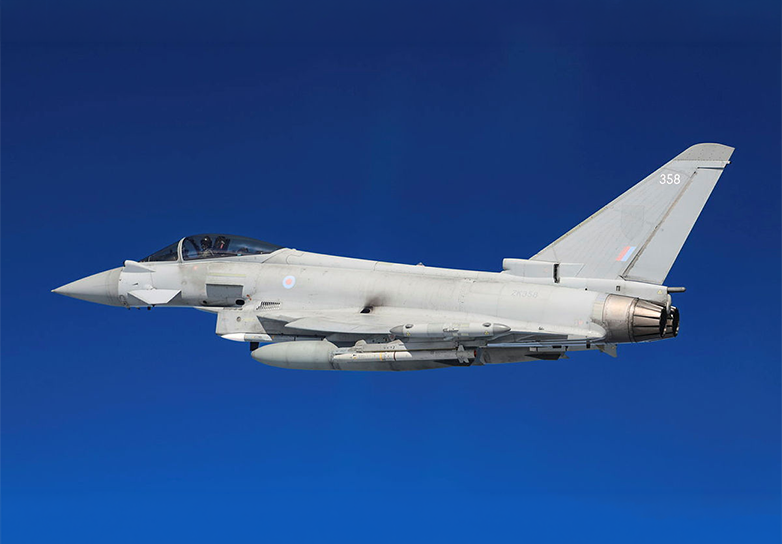
Delivering complex defence capability increasingly relies on collaboration across borders. While multinational programmes such as AUKUS and GCAP offer clear advantages in sharing cost, capability and expertise, they also introduce challenges in delivery, access and coordination.
At the Farnborough International Airshow, techUK convened a roundtable with leading voices from across defence – including from the Ministry of Defence, GCAP Agency, QinetiQ, AtkinsRéalis, BMT and Frazer Nash Consulting – to discuss how collaboration between governments and international partners can deliver at the pace demanded by today’s security environment.
“We are operating in a very different environment than we were just a few years ago,” observed one panellist, reflecting on the rapidly changing defence and security landscape. As threats evolve at a faster pace, defence organisations are under increasing pressure to deliver capability quickly, adapt continuously, and much of the answer lies in working together. Where allied nations are fielding similar, sometimes identical, systems, working together allows partners to deliver capability at scale and avoid duplicating efforts. to.
This shift is already influencing the way defence programmes are being designed and delivered. As another speaker noted, “we're starting to see platforms being shared across the whole of NATO”. At the same time, new international partnerships are emerging to deliver shared defence and industrial objectives. Speakers concurred that while NATO provides an important framework for cooperation, much of the investment and delivery still sits with individual nations.
This approach reflects many of the same principles underpinning the Global Combat Air Programme (GCAP) as well as AUKUS. While traditional alliances like NATO are increasingly encouraging greater interoperability and the sharing of capabilities between allied nations, GCAP provides a practical example of how entirely new international partnerships can be established to deliver shared defence and industrial outcomes. Bringing together the UK, Japan and Italy, GCAP is designed around shared principles and objectives, with collaboration, data sharing and joint innovation embedded from the outset.
While not all partnerships may look the same, fundamental to any programme must be to first establish a common understanding of what collaboration really means. Common concepts such as cloud, service or system carry different definitions across companies and nations, and standards diverge too. Establishing that shared language takes sustained, in-person effort, constantly reviewed as programmes and partners change.
Whatever the programme, at their core they must balance national sovereignty with the benefits of collective development, creating trusted frameworks that enable partners to share information, expertise, and capabilities at scale.
Building trust from the outset
This emphasis on trust and confidence was reflected in discussions around programme design and governance. Establishing clear governance structures, common objectives and transparent decision-making processes at an early stage enables participating nations to work together more effectively while maintaining confidence in the security and integrity of shared systems. NATO has already demonstrated the value of this approach through its support for multinational capability development, with Allies launching 38 multinational capability projects that strengthen interoperability.
Despite this, establishing trust in the sector is only the first step. Speakers highlighted that the greatest challenges facing the multinational programmes are not always technical but organisational. Whilst there have been significant advances in digital engineering and data sharing technologies, there are still some questions around how industries work together, national decision rights and intellectual property (IP). As one speaker supporting AUKUS delivery noted, these issues sit "around the periphery" of the technology itself, but “if you can design those in early, that will give people shared capability and confidence earlier.”
Controlling Intellectual Property is a particular strain: when a whole sector works in a shared environment, the tools to manage rights at the necessary scale, secrecy and volume of data barely exist. “How do you turn around and go, that IP packet’s mine, and not that one?” one panellist asked. Giving partners confidence that they will retain something critical to the value to their business or national effort isa precondition for collaboration.
Aligning standards and processes
Certification is one area where alignment is just beginning. Platforms and certification artefacts are increasingly being shared across the whole of NATO andother countries, but as one speaker noted allies must have “a more common bar” to ease differences and take regulators on the journey rather than being presented with a finished position.
In practice, this means language and standardisation as key enablers. One speaker noted that the translation of a single technical term between languages can introduce a misstep, making that shared terminology and standards crucial.
Agreeing how access and data move, before requirements change, is what stops a programme creating its own bottlenecks. and the cost of failure here is real: on a past programme, flight-test data had to be physically transferred for evaluation every time.A secure process for data-sharing for real-time analysis should have been designed in from the start.
The knowledge churn
The largest programmes can span decades, so retaining knowledge can prove a further challenge. As personnel move between organisations and roles, valuable institutional knowledge can be lost, creating inefficiencies and forcing teams to revisit issues that have already been resolved.
Reflecting on the experience of a colleague, one panellist noted that much of his time was spent re-explaining processes and agreements to new stakeholders joining the effort. Where security arrangements, access controls and governance structures can take years to establish, continuity of expertise can be just as important as developing new technology, putting a premium on knowledge management and the collaborative environments that support it. “The hard bit is the human part…do we have the right experience in the right places to keep some of these challenges moving forward?”
AI as an enabler but only if…
Building on the discussion around retaining expertise, panellists argued that future multinational defence programmes will increasingly depend on harnessing artificial intelligence (AI) effectively. As one speaker observed, “at the heart of these future capabilities will be the need for artificial intelligence.” AI is already emerging as a critical enabler across defence, supporting everything from data analysis and decision-making to predictive maintenance, mission planning and autonomous systems.
However, speakers stressed that regardless of the technology, the value of AI ultimately depends on the quality of the data, governance and collaboration frameworks that underpin it. In multinational environments, AI systems must be able to operate across organisational and national boundaries while maintaining trust, security and interoperability.
Security is the precondition. One speaker warned that heavy reliance on cloud and centralised compute is itself a vulnerability, arguing the need to do more computing at the edge. Another described secure-by-design as simple in concept but hard in practice, with too many organisations unclear about the risk they carry. Across a multi-partner data stack, the result is what he called “a fog of risk,” where no one fully understands how the risk is layered.
The benefits of programmes also must be felt equitably. Canada, a new GCAP observer, is reforming its defence enterprise to plug in and acquire faster. Its industrial strategy follows a “build, partner, buy” logic: build in Canada where possible, partner with allies next, and buy elsewhere only when neither works, with value returning home.
Taken together, these themes highlight the direction of travel for defence capability development across NATO and beyond. Programmes such as GCAP and AUKUS demonstrate how nations can collaborate to develop complex capabilities while balancing national requirements and collective objectives. As one panellist argued, however, “collaboration has to be treated as a capability in its own right”, rather than something added to a programme later. As the security environment continues to evolve, success will depend not only on integrating technologies such as AI, but also on building the trusted frameworks, behaviours and partnerships needed to deliver capability at speed and scale.
Thanks to Jeremy Wimble, Defence Programme Manager, techUK, for moderating the discussion and all panellists:
- John Fortune – Chief Digital Information Officer for the Future Combat Air System (FCAS) programme
- Olaf Brodowski – Managing Director of QinetiQ Germany
- Simon Joy – Head of Engineering, Governance, and Resource at the GCAP Agency
- Guy Tomlinson – Global Head of Growth and Capability at BMT
- Chris Gray – Client Director at Fraser Nash Consulting
- Paul Weston – Technical Director at AtkinsRéalis
- Antonella Tomaro – Vice President for Defence for AtkinsRéalis Canada
The techUKmulti-national defence programmes roundtable was convened in association with AtkinsRéalis as part of the Farnborough International Airshow, July 2026.
Please note that you are now leaving the AtkinsRéalis website (legal name: AtkinsRéalis Group inc.) and entering a website maintained by a third party (the "External Website") and that you do so at your own risk.
AtkinsRéalis has no control over the External Website, any data or other content contained therein or any additional linked websites. The link to the External Website is provided for convenience purposes only. By clicking "Accept" you acknowledge and agree that AtkinsRéalis is not responsible, and does not accept or assume any responsibility or liability whatsoever for the data protection policy, the content, the data or the technical operation of the External Website and/or any linked websites and that AtkinsRéalis is not liable for the terms and conditions (or terms of use) of the External Website. Further, you acknowledge and agree that you assume all risks resulting from entering and/or using the External Website and/or any linked websites.
BY ENTERING THE EXTERNAL WEBSITE, YOU ALSO ACKNOWLEDGE AND AGREE THAT YOU COMPLETELY AND IRREVOCABLY WAIVE ANY AND ALL RIGHTS AND CLAIMS AGAINST ATKINSRÉALIS, AND RELEASE, DISCHARGE, INDEMNIFY AND HOLD HARMLESS ATKINSRÉALIS, ITS OFFICERS, EMPLOYEES, DIRECTORS AND AGENTS FROM ANY AND ALL LIABILITY INCLUDING BUT NOT LIMITED TO LIABILITY FOR LOSS, DAMAGES, EXPENSES AND COSTS ARISING OUT OF OR IN CONNECTION WITH ENTERING AND/OR USING THE EXTERNAL WEBSITE AND/OR ANY LINKED WEBSITES AND ANY DATA AND/OR CONTENT CONTAINED THEREIN.
Such waiver and release specifically includes, without limitation, any and all rights and claims pertaining to reliance on the data or content of the External Website, or claims pertaining to the processing of personal data, including but not limited to any rights under any applicable data protection statute. You also recognize by clicking “Accept” that the terms of this disclaimer are reasonable.
The information provided by Virtua Research cited herein is provided “as is” and “as available” without warranty of any kind. Use of any Virtua Research data is at a user’s own risk and Virtua Research disclaims any liability for use of the Virtua Research data. Although the information is obtained or compiled from reliable sources Virtua Research neither can nor does guarantee or make any representation or warranty, either express or implied, as to the accuracy, validity, sequence, timeliness, completeness or continued availability of any information or data, including third-party content, made available herein. In no event shall Virtua Research be liable for any decision made or action or inaction taken in reliance on any information or data, including third-party content. Virtua Research further explicitly disclaims, to the fullest extent permitted by applicable law, any warranty of any kind, whether express or implied, including warranties of merchantability, fitness for a particular purpose and non-infringement.
The consensus estimate provided by Virtua Research is based on estimates, forecasts and predictions made by third party financial analysts, as described above. It is not prepared based on information provided by AtkinsRéalis and can only be seen as a consensus view on AtkinsRéalis' possible future results from an outside perspective. AtkinsRéalis has not provided input on these forecasts, except by referring to past publicly disclosed information. AtkinsRéalis does not accept any responsibility for the quality or accuracy of any individual or average of forecasts or estimates. This web page contains forward-looking statements based on current assumptions and forecasts made by third parties. Various known and unknown risks, uncertainties and other factors could lead to material differences between AtkinsRéalis' actual future results, financial situation, development or performance, and the estimates given here.
Downloads
Trade releases