
on this page
-
Markets
-
Services
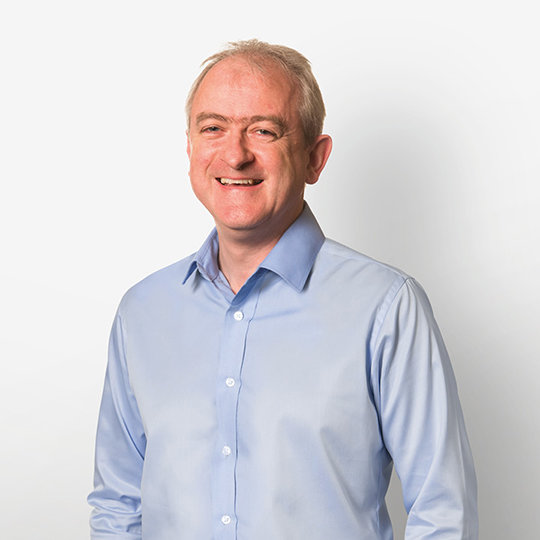
Roger Cruickshank
Senior Director, Dubai, UAE contact form+971 4 405 9300
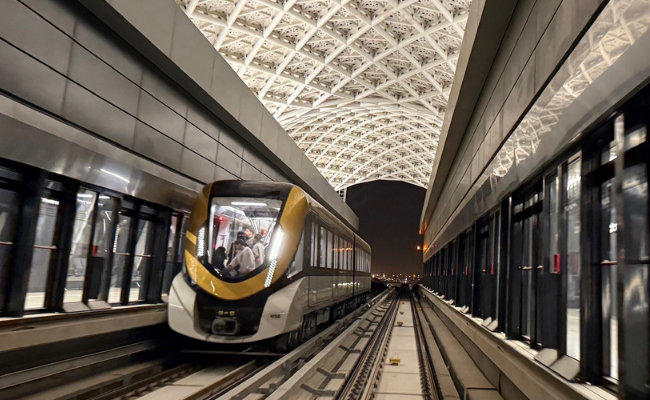
When Riyadh Metro welcomed its first passengers in December 2024, it marked a major milestone for a city investing heavily in public transport. Yet infrastructure delivery is only part of the story. The longer-term challenge, and benchmark for success, is the ongoing creation of a transport network that becomes a seamless part of how people live, work and move every day.
The world's strongest public transport cities illustrate this shift. Hong Kong's network supports approximately 11.7 million passenger journeys a day across rail, buses, trams, ferries and other modes. Singapore's long-term transport strategy focuses on integrated mobility, with 92% of residents now able to reach their nearest neighbourhood centre within 20 minutes and 67% able to commute to work within 45 minutes through walking, cycling and public transport.
Roger Cruickshank, Regional Director for Transportation at global engineering company AtkinsRéalis, has seen similar patterns emerge in projects across the Middle East and Asia-Pacific.
"No matter which city you examine, commuters don't experience separate rail lines, or bus stations,” he says. “To them, it's a single journey, whether it's from home to work or from work to recreation. Berlin is a useful example because it didn’t become an integrated transport city by building a metro and stopping there; it became one because multiple layers of mobility, like suburban rail, metro, tram and bus, evolved into a connected network over time.”
Riyadh might be following its own path, but the ambition is a familiar one, says Cruickshank. Drawing on AtkinsRéalis’ experience of providing programme management and supervision services for the Riyadh Metro, he describes a vision of a “transport network that supports the city’s growth and becomes part of how people organise their daily lives.”
Long-term strategy
One of the biggest challenges in building integrated transport systems is that the network must often be designed long before future demand fully materialises. For Riyadh, this challenge is particularly significant as the city is building an integrated transport system while simultaneously experiencing rapid population growth, economic diversification and large-scale urban development. Riyadh’s population is forecast to grow to 9.6 million people by 2030 and the number of Saudis working in Riyadh is projected to increase by 16% to 23% by 2030.
These factors, along with changing travel patterns and major development programmes, can reshape mobility requirements over decades. Transport infrastructure, therefore, sits at the centre of economic development and the Riyadh Metro forms a critical part of the Kingdom’s vision for the city’s future.
Spanning 176 km across six lines and 85 stations, the network has the capacity to carry up to 3.6 million passengers per day. It is supported by the Riyadh bus network, which covers approximately 1900 km and will ultimately include more than 800 buses and over 2900 stations and stops.
The wider programme is expected to remove approximately 250,000 car journeys from the city’s roads every day. Metro, bus, ticketing systems, digital journey planning, operations and future extensions have all been brought together as components of a single mobility ecosystem, with reliability now the defining outcome.
"The lasting shift happens when journeys become predictable enough that people start organising daily life around the network," Cruickshank says.
Early indicators suggest that this shift is already underway. Between the third week of operations in December 2024 and May 2026, weekly ridership across Riyadh Metro lines 4, 5 and 6 increased by 57%. Some corridors and stations experienced even stronger growth, with passenger demand rising by more than 300% as commuters increasingly embraced the wider network and its connections. Daily ridership across the three lines approached double the early operational levels within the first 18 months of service, pointing to both sustained demand for such a network and growing confidence in the reliability and convenience of integrated public transport in Riyadh.
For Cruickshank, this demonstrates how rapidly travel behaviours can evolve once an integrated mobility system gains momentum. The metro’s success also presents lessons for planned expansion.
Delivering the six lines of the new network required close coordination across stakeholders, city authorities and delivery partners. It was especially important to minimise disruption to existing transport infrastructure.

Operations insights
While these experiences have proven vital to establish efficient processes and workflows, the most valuable insights have emerged after operations began.
With increased ridership, some stations are experiencing stronger demand than originally forecast. There have been instances of local road congestion around certain stations due to pick-up and drop-off activity that competes for space with feeder transport services. These early teething challenges and operational insights, reflective of actual user behaviour instead of projections, are being addressed and are informing the next stage of metro planning. This includes where additional space is required, how stations might connect most effectively with buses and taxis, and how the wider public realm can better support growing passenger volumes. For future metro lines, including lines 7 and 8, the emphasis is increasingly on the end-to-end passenger journey rather than the metro in isolation.
“The network we see today is the foundation,” Cruickshank says. “Riyadh's population, economic activity and urban footprint will continue to grow over the next few decades. Planning for that future means preserving flexibility for future corridors, capacity and demand. The strongest transport systems are designed around growth that hasn't happened yet."
As well as Riyadh, AtkinsRéalis has also supported major rail and public transport development programmes in Doha, Dubai, Abu Dhabi, Kuwait and Muscat. These experiences have revealed to Cruickshank a broader trend now in play across the Gulf where cities are increasingly integrating transport planning with land use, economic development and long-term growth strategies. In addition, as urban mobility systems mature, they are creating the base for stronger regional connectivity between cities.
“You have to get the city systems working first,” Cruickshank says. “Once cities are connected internally, you're in a much stronger position to think about high-speed rail between major centres, which will start connecting economies, labour markets and opportunities across borders. That's where mobility becomes something much bigger than transport."
Viewed through that lens, Riyadh offers an early view of how the next generation of Gulf cities may evolve: from seamless internal integrated transport networks that are increasingly connected to neighbouring cities and locations across the wider region. The transport systems that create these connections will help shape how people live, work and move for decades to come. Riyadh's steady transformation shows that this journey has already begun.
This article was originally published on the International Railway Journal website.
Please note that you are now leaving the AtkinsRéalis website (legal name: AtkinsRéalis Group inc.) and entering a website maintained by a third party (the "External Website") and that you do so at your own risk.
AtkinsRéalis has no control over the External Website, any data or other content contained therein or any additional linked websites. The link to the External Website is provided for convenience purposes only. By clicking "Accept" you acknowledge and agree that AtkinsRéalis is not responsible, and does not accept or assume any responsibility or liability whatsoever for the data protection policy, the content, the data or the technical operation of the External Website and/or any linked websites and that AtkinsRéalis is not liable for the terms and conditions (or terms of use) of the External Website. Further, you acknowledge and agree that you assume all risks resulting from entering and/or using the External Website and/or any linked websites.
BY ENTERING THE EXTERNAL WEBSITE, YOU ALSO ACKNOWLEDGE AND AGREE THAT YOU COMPLETELY AND IRREVOCABLY WAIVE ANY AND ALL RIGHTS AND CLAIMS AGAINST ATKINSRÉALIS, AND RELEASE, DISCHARGE, INDEMNIFY AND HOLD HARMLESS ATKINSRÉALIS, ITS OFFICERS, EMPLOYEES, DIRECTORS AND AGENTS FROM ANY AND ALL LIABILITY INCLUDING BUT NOT LIMITED TO LIABILITY FOR LOSS, DAMAGES, EXPENSES AND COSTS ARISING OUT OF OR IN CONNECTION WITH ENTERING AND/OR USING THE EXTERNAL WEBSITE AND/OR ANY LINKED WEBSITES AND ANY DATA AND/OR CONTENT CONTAINED THEREIN.
Such waiver and release specifically includes, without limitation, any and all rights and claims pertaining to reliance on the data or content of the External Website, or claims pertaining to the processing of personal data, including but not limited to any rights under any applicable data protection statute. You also recognize by clicking “Accept” that the terms of this disclaimer are reasonable.
The information provided by Virtua Research cited herein is provided “as is” and “as available” without warranty of any kind. Use of any Virtua Research data is at a user’s own risk and Virtua Research disclaims any liability for use of the Virtua Research data. Although the information is obtained or compiled from reliable sources Virtua Research neither can nor does guarantee or make any representation or warranty, either express or implied, as to the accuracy, validity, sequence, timeliness, completeness or continued availability of any information or data, including third-party content, made available herein. In no event shall Virtua Research be liable for any decision made or action or inaction taken in reliance on any information or data, including third-party content. Virtua Research further explicitly disclaims, to the fullest extent permitted by applicable law, any warranty of any kind, whether express or implied, including warranties of merchantability, fitness for a particular purpose and non-infringement.
The consensus estimate provided by Virtua Research is based on estimates, forecasts and predictions made by third party financial analysts, as described above. It is not prepared based on information provided by AtkinsRéalis and can only be seen as a consensus view on AtkinsRéalis' possible future results from an outside perspective. AtkinsRéalis has not provided input on these forecasts, except by referring to past publicly disclosed information. AtkinsRéalis does not accept any responsibility for the quality or accuracy of any individual or average of forecasts or estimates. This web page contains forward-looking statements based on current assumptions and forecasts made by third parties. Various known and unknown risks, uncertainties and other factors could lead to material differences between AtkinsRéalis' actual future results, financial situation, development or performance, and the estimates given here.
Downloads
Trade releases